How AI Can Analyze Donor Requirements?
3rd Meeting of the Virtual Working Group on AI in Humanitarian Logistics: How can AI (large language models, short LLMs) help quantify regulatory complexity in humanitarian logistics by analyzing donor requirements as structured data rather than treating them as unstructured text?
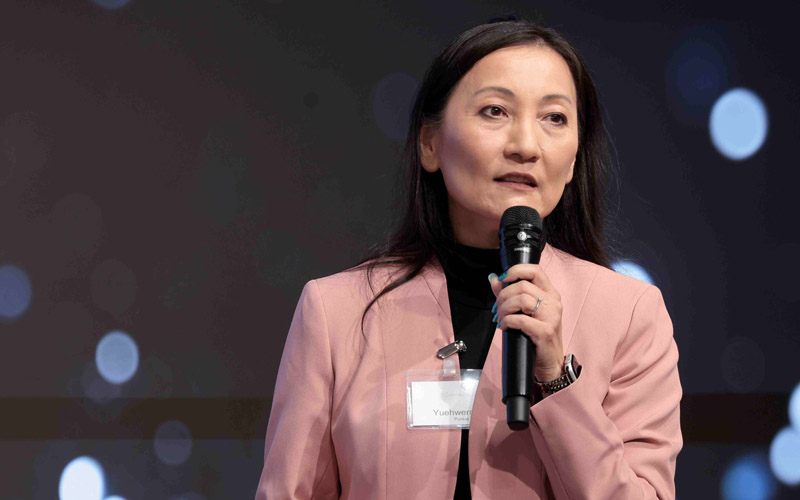
During the 3rd meeting of the virtual working group “AI in humanitarian logistics” of the Logistics Hall of Fame, Dr. Yuehwern Yih, Tompkins Professor of Industrial Engineering at Purdue University, along with her students, Jessie David and Lian Z. Laventall, and collaborator, Sarah Penniman-Morin, Chief Global Supply Chain Officer at International Rescue Committee, shared research on that topic.
The work focused on a persistent operational problem: Humanitarian organizations often face different expectations from donors, and in practice they tend to follow the most restrictive rules, which increases redundancy, risk, cost, and administrative burden. Using large language models, the team compared a GUI-based approach (off the shelf chatbot interfaces) with an API-based workflow that extracts text from donor documents, applies a domain-informed taxonomy, and classifies clauses into restrictions, qualified restrictions, decisions, and donor rights.
The presentation showed that while GUI tools offer a lower barrier to entry, they can produce inconsistent results across runs, are more prompt-dependent, and may hallucinate or miss regulatory nuance. By contrast, the API approach required greater upfront technical investment but delivered more reproducible, explainable, and comparable outputs across donors including ECHO, AFD, GFFO, and DoS.
The analysis also demonstrated that donor language can be measured in ways that reveal restriction rates, decision rates, and thematic differences in areas such as procurement, transparency, and commodity eligibility. Most importantly, the project underscored that how AI, when co-designed with field partners, can help align donor oversight with NGO agility, so that compliance supports, rather than slows, lifesaving logistics.